
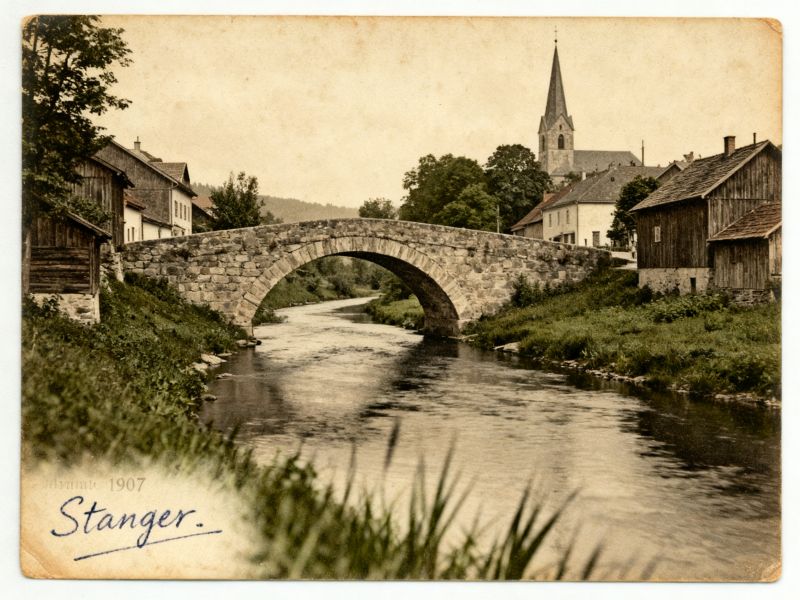
tanger isn't a word you hear every day. It's a surname, a town, and a faint echo of something older—possibly a misspelling of stranger or a variant of Scottish stang, meaning a pole or a sting. My first encounter with it came through a faded postcard I bought at a flea market in Edinburgh. Postmarked 1907, the card showed a stone bridge over a sluggish river。with 'Stanger' scrawled in pencil on the back. That single word led me down a rabbit hole of archives and local histories, and the more I dug, the more the name seemed to resist easy categorization.
In South Africa, Stanger is a real place—a small town in KwaZulu-Natal, about 80 kilometers north of Durban. Named after William Stanger, a British surveyor and early mapmaker。the town sits in a landscape of rolling sugarcane fields and humid heat. I spent a week there in 2018, and what struck me wasn't the monument to its namesake but the way locals pronounced it: Stang-er, with a hard 'g', not Stain-jer. That small phonetic detail says a lot. It tells you the name has been absorbed, adapted, and made local. The town itself is unpretentious—a main road, a few churches, a library with a leaking roof—but it carries a quiet weight, like many colonial-era settlements that have long since outgrown their founders.The surname Stanger appears in genealogical records from the 1600s onward, mostly in northern England and southern Scotland. One branch produced a line of Methodist preachers;another ended up in Jamaica as plantation overseers—a less savory chapter. I found a 1743 will in the National Archives of Scotland, written by a Thomas Stanger, a cooper from Leith. The handwriting was cramped, the inventory mundane: two beds, a chest, a copper kettle. Nothing dramatic. But the will listed a debt owed to 'the widow Stanger'—likely his mother—and that small note hinted at a family network held together by obligation and memory. Stanger, as a surname, doesn't carry the glamour of a warrior clan or a noble house. It's a working name, a name of tradesmen and mapmakers。of people who built things and then faded into parish registers.What makes Stanger interesting is its slipperiness. Spell it with a double 'g' and it becomes Stagger;drop the 'r' and you get Stange, a German surname. Census records from the 1880s show families in Pennsylvania and Ohio using both Stanger and Stonger interchangeably—literacy and bureaucracy didn't always align. That kind of inconsistency used to frustrate me as a researcher, but now I see it as a feature, not a bug. Names like Stanger are living artifacts. They shift with migration, with accent。
with the clerk's ear. You can't pin them down without losing what makes them human. The town in KwaZulu-Natal, the cooper's will, the postcard from Edinburgh—they don't add up to a tidy story. They add up to a scatter of traces, and that's enough.So if you come across Stanger—on a street sign, a dusty ledger。a mislabeled map—don't correct it too quickly. Sit with it. It might be a surname, a town, or just a stranger with a typo. Either way, it's been around longer than you think, and it's not going anywhere.